
How to Chose the Right Type of Fire Extinguisher?
When it comes to fire safety, many people in the Philippines believe that any fire extinguisher will do the job. Unfortunately, that misconception can turn a small fire into a dangerous disaster.
Using the wrong extinguisher such as water on a grease fire can cause flames to spread instantly.
This is why choosing the right fire extinguisher is essential for homes, offices, restaurants, and commercial spaces. Dry chemical extinguishers are commonly used because they can handle multiple fire types, but specific environments may require specialized units.
Different types of fires require different types of extinguishers.
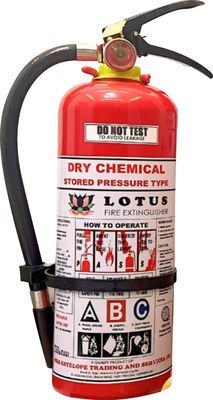
ABC - Red Container
Material
Contains Dry Chemical Powder (usually monoammonium phosphate).[1][2][3] This is a fine, yellow dust that is pressurized with nitrogen.
Clean Up
Leaves a heavy, messy, and corrosive powder residue. This powder can get into every crevice of electronics or machinery, often ruining them even if the fire didn't. It requires extensive cleaning after use.
Application
Best for general-purpose use in homes, hallways, or warehouses where there is a mix of wood, paper, and flammable liquids, and where cleanup is less of a concern.
Fire Classes
Class A: ⭐Ordinary combustibles (wood, paper, trash).
Class B: ✅Flammable liquids (gasoline, grease, oil).
Class C: ⛔Electrical fires (energized equipment). Though not advisable as it can cause more damage to electronic devices.
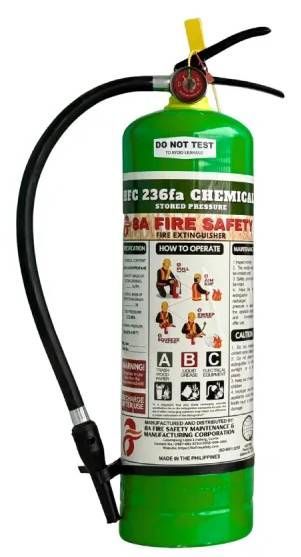
HFC-236fa - Green Container
Material
Contains HCFC-123 (Hydrochlorofluorocarbon), also known as a Clean Agent. It is a liquid that turns into a gas when discharged.
Clean Up
Leaves no residue, since it evaporates into a gas, it does not require cleanup, making it the preferred choice for protecting expensive or sensitive items.
Application
Specifically designed for sensitive electronics and high-value equipment. It is commonly found in server rooms, computer labs, offices with many PCs, and hospitals. It stops the fire without damaging the internal circuits of the machines.
Fire Classes
Class A: ✅Ordinary combustibles (wood, paper, trash).
Class B: ✅Flammable liquids (gasoline, grease, oil).
Class C: ⭐⭐⭐Electrical fires (energized equipment).
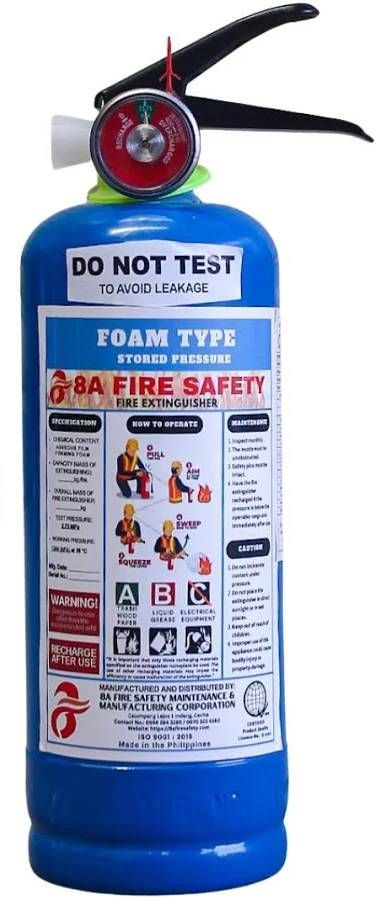
AFFF - Blue Container
Material
It contains a water-based foam called Aquenos Film Forming Foam. When sprayed, it creates a thick "blanket" on top of the fire.
Its main advantage is that it floats on top of burning liquids (like a gasoline spill). This "film" seals in the vapors, which prevents the fire from starting up again (re-ignition).
Clean Up
Leaves a wet, soapy residue. It is easier to clean up than the dry powder (Red), but it will still make things wet, unlike the "clean" gas (Green).
Application
Specifically designed for sensitive electronics and high-value equipment. It is commonly found in server rooms, computer labs, offices with many PCs, and hospitals. It stops the fire without damaging the internal circuits of the machines.
Fire Classes
Class A (Ordinary Solids): ⭐⭐ Very effective for wood, paper, and cloth because the water in the foam cools the fire down.
Class B (Flammable Liquids): ⭐⭐⭐This is where it shines. It is the best choice for petrol, oil, and diesel fires because it smothers the liquid surface.
Class C (Electrical): ⚠️⛔⚠️ NOT RECOMMENDED. Because AFFF is water-based, it can conduct electricity. Using it on a live electrical fire could give you an electric shock. (Unlike the Green HCFC-123, which is safe for electronics).[1][2]
Beyond choosing the correct type, proper placement and maintenance are critical. Fire extinguishers should be easily accessible, clearly marked, and routinely inspected to ensure they are fully operational during emergencies.
| Red (Dry Chemical) |
|---|
| Red Label |
| ABC (General Purpose) |
| Damage (Corrosive) |
| Good |
| Very Messy (Powder) |
| Green (Clean Agent) |
|---|
| Green Label |
| ABC (Electronics) |
| Safe (Best choice) |
| Okay |
| None (Clean) |
| AFFF (Foam) |
|---|
| Cream or Blue Label |
| AB (Liquid Spills) |
| Safe (Best choice) |
| Excellent (Prevents re-start) |
| Wet/Soapy (Liquid) |
Fire Guard's professional fire protection services in the Philippines help ensure your equipment is compliant with local safety standards, including regular inspections, refilling, and certification.
Don’t wait for a fire emergency to find out you’re unprepared.
👉Contact Us
today to get expert advice on the best fire extinguisher solutions in the Philippines.
👉Request a FREE fire safety assessment for your home or business.
Protect lives. Protect property. Be ready when it matters most.
You might also like
CONTACT US
Get a Free Quote for your specialized needs today!